How we adapted to extreme heat, rapidly changing conditions and shifting objectives — and still enjoyed a fantastic season of Alpine climbing.
Summer 2026 was another reminder of just how quickly the Alps are changing. Prolonged heatwaves, rapid snowmelt and deteriorating glacier conditions presented significant challenges for mountaineering throughout the season.
As mountain guides based in Chamonix, we’re seeing these changes first-hand. Routes that were once reliable summer objectives are becoming increasingly difficult to climb in good condition, and the traditional mountaineering season is shifting.
Yet despite these challenges, we had a fantastic summer. We climbed excellent routes across France, Switzerland and Italy, explored quieter mountain areas and introduced clients to objectives they might never otherwise have considered.
The key was adapting to the conditions rather than trying to force the original plan.
A Changing Alpine Summer
Traditionally, July and August have been the prime months for Alpine mountaineering. August in particular was often an excellent time for high-altitude snow and ice routes, with consolidated snow, established tracks and accessible glaciers.
That’s increasingly difficult to rely on.
We’re seeing a trend towards shorter seasons for classic snow and ice routes, with many objectives now better suited to late spring and early summer. By August, prolonged periods of hot, dry weather can leave routes stripped of snow, with exposed ice, complicated glacier approaches and increased rockfall.
However, it’s not simply a case of moving the mountaineering season earlier.
Heatwaves can arrive from June onwards, and their timing and intensity are difficult to predict months in advance. Even routes in excellent condition can deteriorate remarkably quickly.
The Frendo Spur — From Perfect Snow to Bare Ice in a Week
On 15 June, we guided the Frendo Spur on the north face of the Aiguille du Midi.

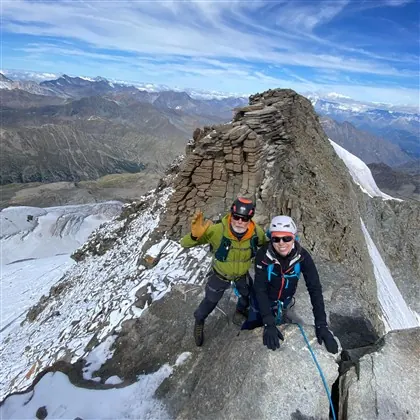
Climbing the Frendo Spur with Sam, 15th June 2026. Perfect conditions and a bomber track 🙂
Conditions were excellent. Solid, secure snow provided ideal climbing on this classic mixed route. It was exactly the sort of early-summer mountaineering we hope to find.
Within approximately a week, everything had changed.
The heatwave that followed rapidly stripped snow from the face, leaving bare ice in numerous places. Significant rockfall was occurring down both sides of the spur, and the route was no longer a suitable climbing objective.
The route hadn’t simply become more technically demanding. The objective hazards had changed substantially, particularly the exposure to rockfall from the surrounding terrain.
It’s a striking example of why conditions must be continually reassessed. Information from a successful ascent just a few days earlier may no longer be relevant after a period of intense heat.
Glaciers: Knowing When to Reduce Exposure
One of the most noticeable features of summer 2026 was the deterioration of glacier conditions.
We saw an extraordinary number of crevasses opening up, alongside increasingly unreliable snow bridges. As the snow cover disappeared, glaciers that had previously offered relatively straightforward approaches became considerably more complicated.
By early July, we were actively trying to avoid glacier travel wherever possible.
That didn’t mean every glacier route was impassable. Other teams continued to climb some of these objectives, and conditions varied between different mountain areas.
For us, it was a question of reducing exposure.
A route may still be technically possible, but spending several hours navigating heavily crevassed terrain, crossing uncertain snow bridges and dealing with limited route options can introduce a level of risk that we’re not comfortable accepting.
The consequences of a heatwave can persist long after temperatures have dropped. A few cooler days won’t necessarily restore damaged snow bridges or make a deteriorated glacier approach straightforward again.
It’s an important distinction when planning mountaineering trips: good weather doesn’t automatically mean good mountain conditions.
Mont Blanc: Changing the Plan Mid-Trip
One of the clearest examples of adapting our guiding programme came during a Mont Blanc trip in July.
Our clients began their programme on 13 July, climbing an acclimatisation peak before their planned Mont Blanc ascent.
During the trip, conditions in the Grand Couloir on the Goûter route deteriorated rapidly. With increasing rockfall exposure, we decided that the level of risk was no longer acceptable for our teams.
It was disappointing news for clients who had understandably arrived with Mont Blanc as their main objective.
Rather than abandon the remaining days, we reorganised the programme around different mountains and more suitable conditions.
One part of the group went rock climbing, continuing their technical skills development, before ascending the Aiguille du Tour.
The other team travelled to the Monte Rosa massif, staying at the Gnifetti Hut and climbing 4,000-metre peaks in the area.
Both groups enjoyed excellent mountaineering, with objectives appropriate to their experience and the conditions. The instruction and skills development that formed an important part of the original programme continued throughout.
Although everyone was initially disappointed about missing Mont Blanc, the response to the alternative climbs was overwhelmingly positive.
It reinforced something we increasingly emphasise to clients: a successful Alpine trip doesn’t necessarily mean reaching the summit you originally planned.
Sometimes the best climbing is somewhere else.
The Matterhorn and the Importance of Flexibility
We faced similar decisions with planned Matterhorn ascents during the summer.
Rockfall risk on the upper mountain led us to choose alternative objectives rather than continue with the original plan.
The Matterhorn, Mont Blanc and other major Alpine peaks are understandably big ambitions for many climbers. People often spend years preparing for these summits, arranging holidays and developing the necessary skills.
We recognise how important those objectives are, and we still plan trips around them. But no mountain can be guaranteed to be in suitable condition on a particular date, especially when trips are booked months in advance.
Our regular clients are often very comfortable with this uncertainty. They arrive with several possible objectives, and together we choose routes that offer the best combination of conditions, challenge and enjoyment.
For clients visiting the Alps for the first time, this approach can take a little more explanation. It’s natural to be focused on a particular summit.
Part of our role as guides is to help clients understand the alternatives and make the most of their time in the mountains, even when the original objective isn’t appropriate.
A Shift Towards Rock, Ridges and Different Mountain Areas
As the summer progressed, we increasingly turned our attention towards rock climbing and carefully selected Alpine ridges.
From mid-July onwards, much of our guiding took place on rocky routes in the Mont Blanc massif, in the Aiguilles Rouges around Chamonix, and across different mountain areas in Switzerland and Italy.
Ridges can often provide excellent alternatives to snow faces and heavily crevassed glacier approaches, particularly where the route avoids unstable terrain and prolonged exposure to rockfall.

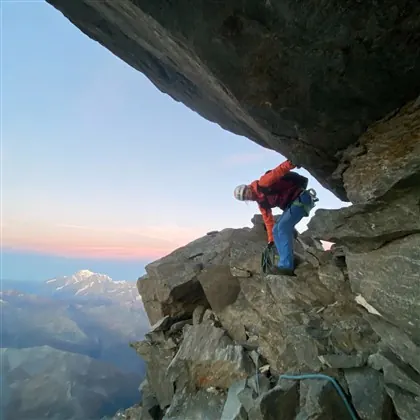
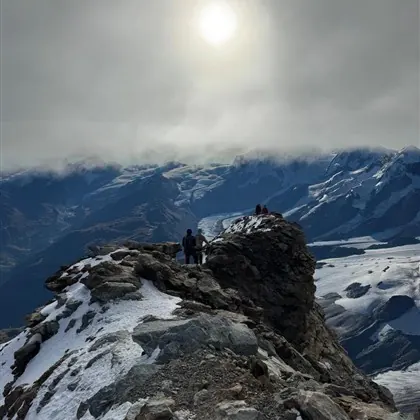
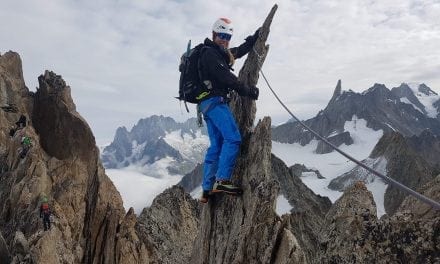
On the north ridge of the weissmies. Descending the rocky south ridge gives a fantastic traverse of the peak without needing to cross major glaciers or dodge rockfall.
Of course, rock climbing isn’t immune to the effects of high temperatures.
The granite mountains around Chamonix can also be affected by heatwaves, and rockfall remains an important consideration. We have to assess individual routes, their aspects, approaches and surrounding terrain rather than assume that climbing on rock is always the safer option.
Nevertheless, the variety of climbing available across the Alps gives us plenty of opportunities to adapt.
Moving between different valleys, countries, altitudes and types of terrain allowed us to enjoy a remarkably varied season, including some fantastic climbs in quieter, lesser-known areas.
Rather than concentrating solely on a handful of famous summits, we chose routes that offered excellent experiences in the conditions we actually had.
What Does This Mean for Future Mountaineering Trips?
For anyone planning a mountaineering holiday in the Alps, we think there are a few important lessons.
Consider the timing of your objectives. Classic snow and ice routes are increasingly worth considering in late spring and early summer rather than automatically choosing July or August. That doesn’t guarantee good conditions, but it can improve the chances of finding suitable snow cover.
Arrive with an open mind. Having a major objective is a great motivation, whether that’s Mont Blanc, the Matterhorn or another Alpine summit. But it’s worth considering alternative climbs that could provide a similarly rewarding experience.
Allow the conditions to determine the route. The best objective isn’t necessarily the most famous mountain or the route originally written into the itinerary. It’s the climb that offers an appropriate challenge with an acceptable level of risk under the prevailing conditions.
And perhaps most importantly, don’t underestimate the value of flexibility.
A heatwave can transform mountain conditions within days. Being prepared to change plans, sometimes even during a trip, is becoming an increasingly important part of Alpine mountaineering.

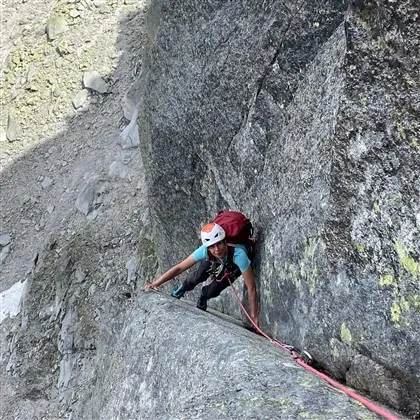
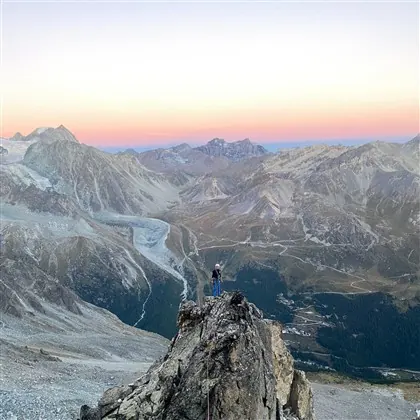
Ash high on the Cassin route of the Piz Badile. Lower altitude, solid rock and great climbing. Not a bad plan B!
Looking Ahead
There’s no doubt that climate change is presenting significant challenges for mountaineering in the Alps.
Glaciers are retreating, traditional seasonal patterns are changing, and some classic routes are becoming increasingly difficult to climb in suitable conditions.
We can’t control those changes, but we can adapt how we approach the mountains.
For us, that means continually reassessing conditions, being willing to change objectives, exploring different mountain areas and encouraging clients to approach their trips with an open mind.
Summer 2026 was challenging, but it was also full of memorable climbing, successful ascents and great experiences with our clients.
The Alps still offer an extraordinary variety of mountaineering opportunities. Finding the best of them increasingly requires flexibility, good judgement and a willingness to look beyond the original plan.
The objective might change, but the adventure doesn’t have to.


 Last-Minute Bookings & Custom Dates